
Upgrading your attic insulation is one of the smartest moves you can make to boost your home’s energy efficiency. But before you dive in, it’s important to understand how to calculate insulation costs. Knowing what to expect helps you plan your budget and avoid surprises. I’m here to walk you through the process in a simple, friendly way. Let’s break it down step-by-step so you can feel confident about your investment.
How to Calculate Insulation Costs: The Basics
Calculating attic insulation costs starts with a few key factors. Think of it like planning a road trip: you need to know your distance, your vehicle’s fuel efficiency, and the price of gas. For insulation, the “distance” is your attic size, the “fuel efficiency” is the type of insulation, and the “price of gas” is the cost per unit of insulation.
Here’s what you need to consider:
- Attic size: Measure the square footage of your attic floor. This is the area you’ll be insulating.
- Insulation type: Different materials have different costs and R-values (which measure insulation effectiveness). Common types include fiberglass batts, blown-in cellulose, and spray foam.
- Depth and R-value needed: The thicker the insulation, the better the energy savings, but also the higher the cost.
- Labor costs: If you hire a professional, labor will add to your total.
- Additional materials: Things like vapor barriers or air sealing might be necessary.
For example, if your attic is 1,000 square feet and you want to install fiberglass batts with an R-value of 38, you’ll multiply the square footage by the cost per square foot of that insulation type. Then add labor and materials.
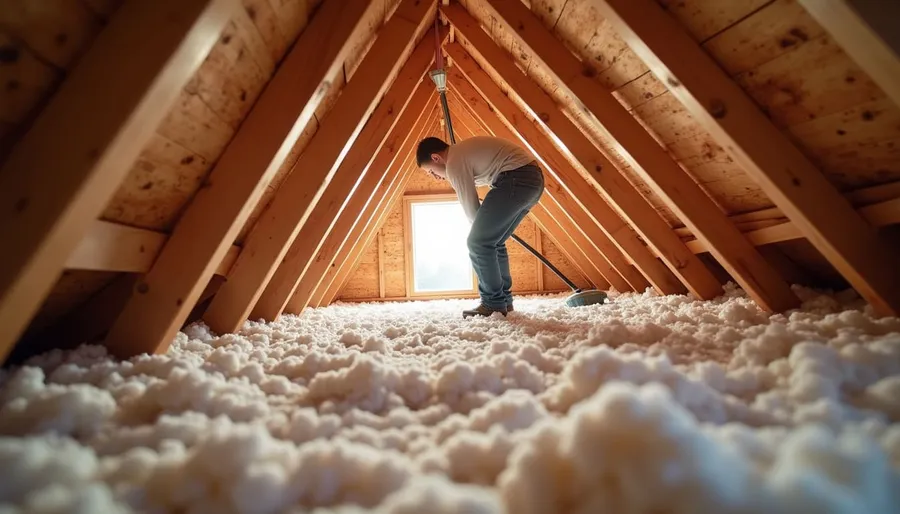
Eye-level view of attic insulation being installed
What Time of Year Is Insulation Cheapest?
Timing your insulation project can save you money. Typically, the best deals happen during the off-season. Think of it like buying winter coats in spring - prices drop when demand is low.
- Late spring to early summer: Many contractors have fewer jobs, so they might offer discounts.
- Fall: Sometimes prices dip before the busy winter season starts.
- Avoid winter and peak summer: These are busy times for insulation pros, so prices tend to be higher.
Scheduling your attic insulation during these off-peak times can help you get a better rate without compromising quality.
Types of Attic Insulation and Their Costs
Choosing the right insulation type is like picking the right tool for a job. Each has pros, cons, and price points. Here’s a quick rundown:
- Fiberglass Batts
- Cost: $0.40 to $1.50 per square foot
- Pros: Easy to install, widely available, good R-value
- Cons: Can leave gaps if not installed carefully
- Blown-in Cellulose
- Cost: $1 to $2 per square foot
- Pros: Fills gaps well, made from recycled materials
- Cons: Can settle over time, reducing effectiveness
- Spray Foam
- Cost: $1.50 to $3.50 per square foot
- Pros: Excellent air sealing, high R-value
- Cons: More expensive, requires professional installation
- Rigid Foam Boards
- Cost: $1.20 to $3 per square foot
- Pros: High R-value, moisture resistant
- Cons: Can be tricky to fit in irregular spaces
Remember, these prices are general estimates. Your local market in Sarasota might vary slightly, but this gives you a solid starting point.
How to Get an Accurate Attic Insulation Cost Estimate
Getting a precise attic insulation cost estimate means gathering detailed info and asking the right questions. Here’s how I recommend approaching it:
- Measure your attic: Use a tape measure or laser measure to get the length and width. Multiply to find square footage.
- Check current insulation: Is there any insulation now? If yes, what type and how thick? Removing old insulation adds to cost.
- Decide on insulation type and R-value: Consider your climate and energy goals. Sarasota’s warm climate benefits from insulation that keeps heat out.
- Get multiple quotes: Contact local insulation contractors for estimates. Ask for itemized quotes to compare materials, labor, and extras.
- Ask about certifications: Quality matters. Certified installers protect your investment.
If you want a quick attic insulation cost estimate, many online calculators can help. Just input your attic size and insulation preferences.
Different types of attic insulation materials ready for installation
Tips to Save Money on Your Attic Insulation Project
Saving money doesn’t mean cutting corners. It’s about smart choices and timing. Here are some tips I’ve found helpful:
- Do some prep work yourself: Clear out the attic, fix leaks, and seal air gaps before the pros arrive.
- Bundle projects: If you need other home improvements, combining them can reduce labor costs.
- Look for rebates: Check if Sarasota or Florida offers energy efficiency rebates or tax credits.
- Choose the right R-value: Don’t over-insulate beyond what your climate needs. Sarasota’s recommended R-value is around 30-60 for attics.
- Get multiple bids: Don’t settle for the first quote. Comparing helps you find the best value.
By planning carefully, you can enjoy a cozy, energy-efficient home without breaking the bank.
Making Your Attic Work for You
Upgrading your attic insulation is more than just a home improvement project. It’s an investment in comfort and savings. When you know how to calculate insulation costs, you take control of your home’s energy future. Whether you choose fiberglass, cellulose, or spray foam, the right insulation will keep your home cooler in Sarasota’s hot summers and reduce your energy bills year-round.
Remember, a well-insulated attic is like a cozy blanket for your home. It keeps the heat out when you want it gone and holds warmth in when you need it. Take your time, gather your info, and make the best choice for your space and budget.
If you want to get started, consider reaching out to local experts who understand Sarasota’s unique climate and home styles. They can help you get the most from your attic insulation investment.
Here’s to a more comfortable, energy-smart home!